
Rockshift Inc
Makani GamesArcade
4.6100.00 Reviews
- Version
- 1.6.3
- Installs
- 100.00K
- Age Rating
- Everyone
Screenshots
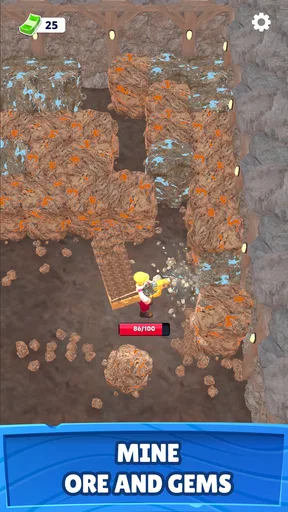
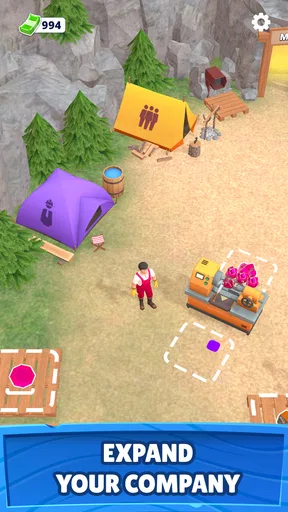
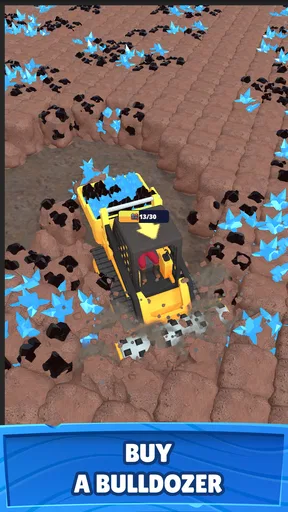
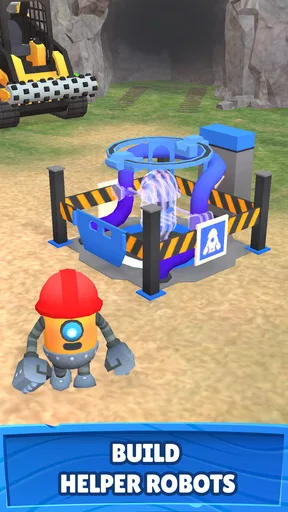
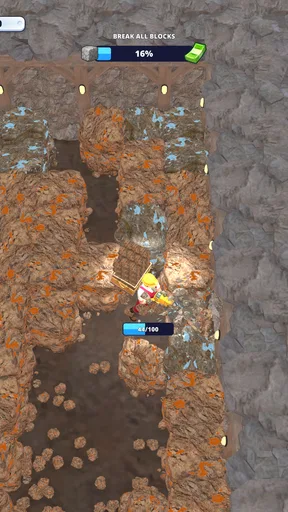
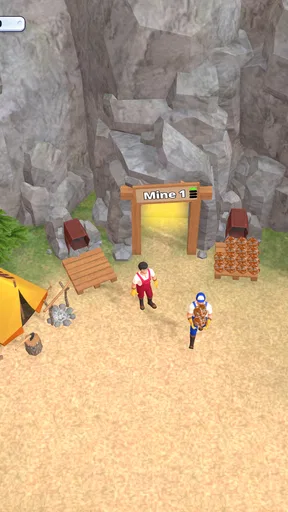
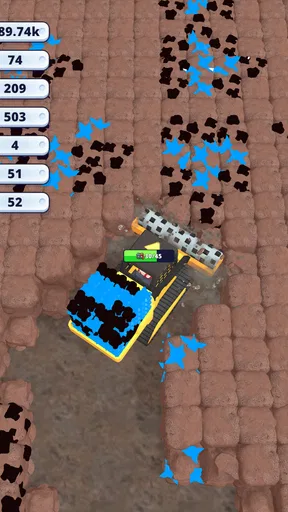
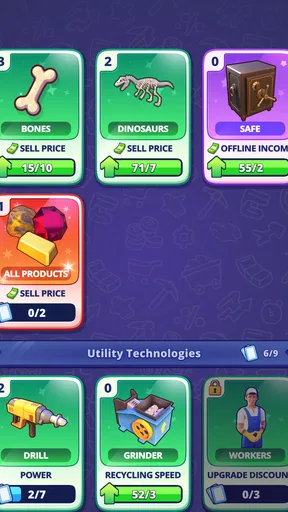
Our Review of Rockshift Inc
 Analysis by Appyee
I went into Rockshift Inc expecting a straightforward mining-themed arcade game, and that is exactly where its appeal begins. You dig for ore, improve the machines doing the work, and use the results to push the business farther. The idea is easy to understand within moments, but the satisfying part is deciding what deserves attention next: faster extraction, better equipment, or broader expansion.
That simplicity makes it an easy game to pick up when I have a few spare minutes. It does not ask me to learn a complicated control scheme before I can enjoy the first action. At the same time, its business theme gives the usual arcade routine a little more direction than simply chasing a high score. Every short burst of activity points toward a larger operation, even when the immediate task is just getting more ore out of the ground.
How the mining loop feels in actual play
I find the mining loop easiest to enjoy when I treat each visit as a small planning task, not a race to keep tapping. Before spending ore, I check which part of the operation seems to be slowing the next step, then choose one improvement and see whether it changes what I want to do afterward. That habit makes brief sessions feel intentional and gives the upgrade decisions more weight.
The first action is clear and immediate
The opening appeal is physical and practical: I start by digging. That first interaction matters because the game quickly connects an action with a visible purpose. Ore is not just a collectible floating around a level; it is the material that supports the next improvement. The result is a clean chain of cause and effect that is particularly friendly to players who prefer games that explain themselves through play rather than long instructions.
In my experience, the best way to approach the opening minutes is to resist treating every available improvement as equally valuable. I pay attention to what currently slows the operation down. If extraction feels like the bottleneck, improving the machine that handles it makes more sense than chasing a distant expansion goal. If the machinery is already keeping up, saving toward the next business step can make the following session feel more productive.
That small decision is one of the more useful details in the design. The game may look like a simple tap-and-upgrade experience, but the order of improvements still affects how quickly the operation starts feeling lively. I found it more enjoyable when I looked for the weakest part of the chain instead of spending resources automatically whenever a button became available.
Feedback arrives in a steady rhythm
The core rhythm is easy to describe: take action, see ore come in, improve the machinery, and watch the operation become more capable. That feedback gives each short session a recognizable shape. I am not waiting through a long introduction to discover whether my choices matter. The game keeps returning a small confirmation that the previous action had a purpose.
This is where the arcade category works in its favor. The experience is not built around a slow, detailed management spreadsheet. Instead, the information is presented through the pace of the operation. When an upgrade helps, the next round of activity feels more efficient. When expansion becomes possible, the sense of progress changes from maintaining one mining site to thinking about the wider business.
The feedback is most effective when I play with a modest goal. For example, I might begin a quick session intending to improve one machine, then continue only if I am close to the resources needed for the next meaningful step. That approach prevents the game from turning a short break into an aimless sequence of repeated actions. It also makes the reward feel earned rather than automatic.
There is a trade-off here. Players who want constant manual action may find the business layer less exciting than a traditional arcade game with more direct movement or combat. The pleasure comes from improving a process, not from mastering a demanding reflex challenge. I would not choose this as my first recommendation for someone looking for intense, skill-heavy arcade play.
Upgrades give the action a reason to continue
Mining ore by itself would become repetitive quickly, so the upgrade system is important even in a compact session. The machines are the bridge between what I do now and what I hope the operation can do next. A good upgrade does not merely add a number to the screen; it changes how I think about the next few minutes. I start asking whether I should collect enough for another improvement or use the current gains to open up more of the business.
My practical advice is to treat upgrades as tools for removing friction, not as decorations. When a machine is clearly holding back progress, that is usually the upgrade with the strongest immediate effect. This is a more reliable approach than buying whatever is cheapest, because a low-cost improvement can still feel weak if it does not address the part of the operation that is limiting the rest.
The business framing also gives the game a useful middle ground between an idle-style routine and a conventional arcade challenge. I am still focused on quick actions and quick rewards, but the rewards feed into a longer plan. That makes the game suitable for someone who enjoys seeing a small operation gradually become more organized without wanting a complex simulation.
The reward is progress you can feel
The strongest reward is not a dramatic story reveal or a difficult level cleared. It is the feeling that the mining operation has become more capable than it was a few minutes earlier. Ore supports upgrades, upgrades support more efficient work, and that efficiency encourages me to consider expansion. The cycle is modest, but it is coherent.
I especially like that the reward can be understood without memorizing a large set of systems. After a busy day, I can return to the game and remember the basic question: what improvement will make this operation run better? That clarity is valuable on a phone, where a game often competes with messages, travel, or a few minutes before an appointment.
A realistic use case is a short commute or a waiting room. I can begin with a simple target, collect enough ore to make a useful improvement, and stop once the next goal would require a longer commitment. The game’s structure supports that kind of stop-and-start play because the action has a natural endpoint whenever an upgrade or expansion decision is reached.
Still, the reward is gradual rather than explosive. If I want every session to end with a major reveal, this may feel too restrained. The satisfaction depends on appreciating incremental improvement. Players who enjoy building a system one step at a time will probably get more from it than players who need frequent surprises.
Resetting a session without losing the bigger purpose
After an upgrade or expansion decision, the immediate pressure eases and the loop starts again from a more capable position. That reset is important: I return to the basic mining action, but I am not doing it for exactly the same reason. The operation has changed, so the next collection phase feels like preparation for a new target rather than a complete repetition of the previous one.
I found it helpful to end a session deliberately instead of playing until the activity became background noise. Once I had made the improvement I was saving for, I could put the game down with a clear sense of completion. Returning later then felt like beginning the next business step, not simply reopening the same unfinished task.
This structure also affects who should skip the game. If you dislike repeating a basic action after each milestone, the reset may feel like a loop that never develops enough variety. Likewise, anyone looking for a story-led mining adventure, a competitive leaderboard chase, or highly elaborate management controls should probably look elsewhere. Rockshift Inc is more focused on the pleasure of a compact progression cycle than on offering a broad simulation.
Where it fits among other arcade games
Compared with a reflex-focused arcade title, this game gives up some immediate intensity in exchange for planning. There is less emphasis on reacting perfectly to danger and more emphasis on choosing the next useful improvement. Compared with a pure idle game, it gives the player a clearer feeling of participation because the mining action remains the entry point for progress.
That positioning is its main strength and also its main limitation. I can recommend it to someone who wants an approachable arcade game with a light business layer. I would be more cautious with a player who expects deep economics, extensive customization, or a constantly changing set of challenges. The mining theme creates a satisfying frame, but it does not automatically turn the experience into a full management simulator.
The game is free to start, which lowers the barrier for trying the loop. There are in-app purchases ranging from $1.49 to $79.99 per item, so I would approach spending carefully and decide in advance whether optional purchases fit the way I want to play. My recommendation is to first see whether the basic action-and-upgrade rhythm is enjoyable without paying. If the loop does not hold your attention on its own, spending will not solve that problem.
Who will enjoy it most
I think Rockshift Inc suits players who like visible progress, short sessions, and uncomplicated resource decisions. It is a good match for someone who enjoys watching equipment improve and prefers a calm, business-oriented form of arcade play. The Everyone content rating also makes it approachable for a broad audience, although the best fit still depends on whether the player enjoys repetition with gradual rewards.
It can also work for people who normally find management games intimidating. The mining operation gives the decisions a concrete context: dig, improve the machinery, and expand when the operation is ready. I never felt that I needed to understand a large set of abstract systems before making a sensible choice. That accessibility is one of the reasons I would suggest it to a friend who wants a low-pressure game rather than a demanding strategy lesson.
On the other hand, I would not put it at the top of the list for players who need a strong narrative, competitive pressure, or constant manual challenge. The game asks me to enjoy the rhythm of progress. If the reward of making a machine more effective does not sound appealing, the central loop may feel too narrow.
Practical details before installing
Makani Games is the developer behind this arcade title. It has an average rating of 4.6 from around 7.1 thousand ratings, with more than 100 thousand installs, which gives it a meaningful audience without changing the fact that personal taste matters more than popularity for this particular style of game.
The release date is January 29, 2026, and the current version is 1.6.3. It runs on Android 7.0 or newer, so owners of older devices should check compatibility before trying it. Those details make it a relatively straightforward download decision for many Android users, especially anyone looking for a free game that can be played in compact bursts.
I would also keep the purchase structure in mind from the beginning. A free entry point is useful, but the presence of optional items means that younger players or shared-device users may benefit from clear spending boundaries. The game’s basic appeal should come from the loop itself: the action, the feedback, the upgrade, and the reason to begin another session.
My verdict on the complete loop
What keeps me returning is the clean sequence. I dig for ore, receive immediate progress, decide which machine deserves attention, and use the improvement to aim at a larger business goal. Once that goal is reached, the next session begins with a stronger operation and a fresh decision. Nothing in that chain is difficult to understand, but the connections are clear enough to make a short play session feel worthwhile.
The most important tip I can offer is to play with a purpose. Choose one bottleneck, improve it, and stop when the next objective becomes too distant for the time you have. That makes the reset feel satisfying and prevents the repeated mining action from becoming empty tapping. It also reveals whether this is the right kind of arcade game for you.
My final impression is positive but specific: Rockshift Inc is best when you want a gentle mining progression loop, not a deep simulation or a high-pressure arcade test. I enjoy its ability to turn a simple action into a sequence of small business decisions. If that combination sounds appealing, the free starting point makes it easy to try. If you need constant novelty or demanding skill-based play, another arcade option will likely serve you better.
Verdict
Strengths of Rockshift Inc
- Simple interface makes the app easy to navigate for new users.
- Useful tools are organized clearly for quick access.
- Runs smoothly on most modern Android and iOS devices.
- Regular updates can improve stability and add useful refinements.
- Suitable for users seeking a focused, straightforward app experience.
Limitations of Rockshift Inc
- Some features may feel limited compared with more established alternatives.
- The app may require permissions that privacy-conscious users should review.
- Performance can vary on older devices or with limited storage space.
- Advanced users may miss deeper customization and control options.
- Support and troubleshooting resources may not cover every issue.
Similar Picks in This Category
View All
Subway Surfers
SYBO Games4.6

Stickman Party 234 MiniGames
PlayMax Game Studio4.6

Subway Princess Runner
Ivy4.4

Temple Run
Imangi Studios4.2

Zombie Tsunami
Mobigame SAS4.6

Stack Ball - Crash Platforms
CASUAL AZUR GAMES4.5
Frequently Asked Questions
What is Rockshift Inc.?
Rockshift Inc. is an application associated with the Rockshift platform, designed to help users access its available services and features from a mobile device. Before downloading, users should confirm that this is the official app published by the legitimate developer, since similarly named applications may exist. The exact tools, supported devices, and user experience can vary depending on the app version and region.
Is Rockshift Inc. free to download and use?
The application may be available as a free download, but users should review its store listing carefully for possible in-app purchases, subscriptions, service charges, or account-related fees. Downloading an app at no cost does not always mean that every feature is free. We recommend checking the pricing section, payment terms, and cancellation policy before creating an account or authorizing any transaction.
What permissions does Rockshift Inc. require?
The permissions requested by Rockshift Inc. depend on the features enabled in the current version. An app may request access to notifications, storage, location, camera, contacts, or other device functions, although not every permission is necessary for every user. During installation and first launch, read each request carefully and deny permissions that do not seem relevant to the service you intend to use.
Is Rockshift Inc. safe to install?
Rockshift Inc. should be downloaded only from an official Google Play or Apple App Store listing and from a verified developer account. Before installing, check the publisher name, recent reviews, update history, privacy information, and requested permissions. No app can be considered completely risk-free, so avoid unofficial APK files, keep your operating system updated, and use a strong password if the application requires an account.
Which devices are compatible with Rockshift Inc.?
Compatibility depends on the version of Rockshift Inc., the operating system, and the developer’s current technical requirements. Check the official store page to confirm the minimum Android or iOS version, supported device types, download size, and regional availability. If the app does not appear in your store, it may be unavailable in your country or incompatible with your device rather than permanently discontinued.
Play our best games!


